Effect of tapioca flour partial substitution with Chum Phae ruby rice flour on the characteristics of crackers
DOI:
https://doi.org/10.60136/bas.v13.2024.1085Keywords:
Cracker, Tubtim Chumphae rice flour, Tapioca flourAbstract
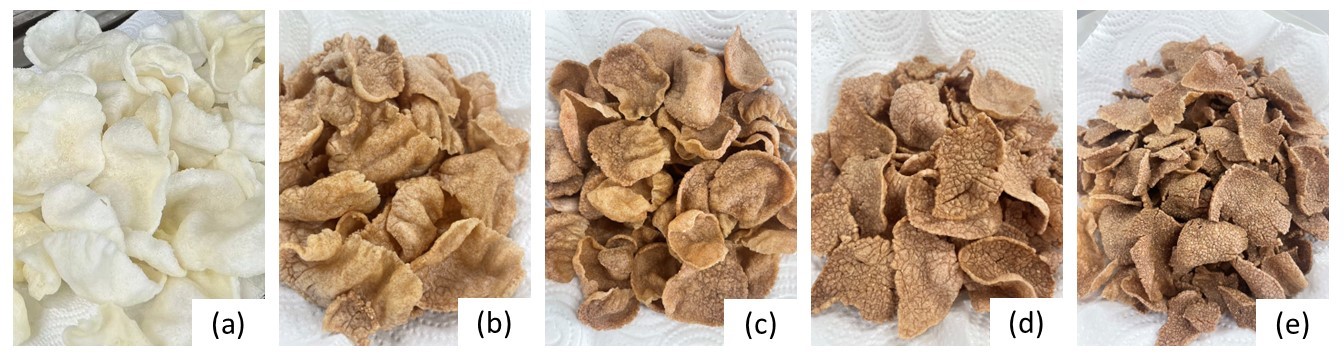
Tubtim Chumphae rice has a red seed coat. Cooked Tubtim Chumphae rice have a clear red color similar to the color of ruby which has a high nutritional value. In this research, Tubtim Chumphae rice was ground into powder of Tubtim Chumphae rice flour. Then Tubtim Chumphae rice flour was used to replace various amounts of tapioca flour at 0% (control recipe), 40%, 50%, 60% and 70% of the total weight of tapioca flour. Tubtim Chumphae crackers were analyzed for the physical properties, the sensory characteristic consumer liking and nutritional values. The results showed that an increasing the level of substitution of tapioca flour with Tubtim Chum Phae rice flour, crispness were different (p≤0.05). An increasing Tubtim Chum Phae rice flour, the crispness decreased. The results of color values showed that the crackers replacing tapioca flour with Tubtim Chumphae rice flour were light brown to reddish brown. In addition, rice crackers that replaced tapioca flour with Tubtim Chum Phae rice flour were evaluated the consumer liking. The panelists gave the highest overall liking for the Tubtim Chumphae rice cracker recipe that replaces 40% of tapioca flour with Tubtim Chumphae rice flour. The comparison of nutritional values of Tubtim Chumphae rice crackers and tapioca crackers found that protein, iron and dietary fiber content in Tubtim Chumphae crackers were 97.25, 1.93 and 5.29 times higher than those in tapioca crackers, respectively. By the way, their energy from fat were less than that in tapioca crackers. Therefore, Tubtim Chum Phae crackers are more suitable to be consumed as a health food than tapioca crackers.
References
ศรายุทธ์ สมประสงค์. ผลของอุณหภูมิและการใช้น้ำมันทอดซ้ำต่อการดูดซับน้ำมัน เนื้อสัมผัสและสีของข้าวเกรียบกุ้งทอด [วิทยานิพนธ์ปริญญาวิทยาศาสตรมหาบัณฑิต]. เชียงใหม่: มหาวิทยาลัยเชียงใหม่; 2551.
สำนักงานมาตรฐานผลิตภัณฑ์อุตสาหกรรม (สมอ.). มาตรฐานผลิตภัณฑ์อุตสาหกรรม ข้าวเกรียบ. มอก. 701-2530. กรุงเทพฯ: สมอ.; 2530.
อรนุช สีหามาลา. การเพิ่มคุณค่าทางโภชนาการและยืดอายุการเก็บรักษาข้าวเกรียบปลา [วิทยานิพนธ์ปริญญาวิทยาศาสตรมหาบัณฑิต]. เชียงใหม่: มหาวิทยาลัยเชียงใหม่; 2545.
สุทธินี สีสังข์. คุณสมบัติของแป้งที่มีผลต่อการแปรรูปผลิตภัณฑ์สัตว์น้ำ [อินเทอร์เน็ต]. 2563 [เข้าถึงเมื่อ 1 มีนาคม 2567]. เข้าถึงได้จาก:https://www4.fisheries.go.th/local/file_document/20200722153849_1_file.pdf
ศิวาพร ศิวเวช, สลักจิต สืบพงษ์ศิริ. ข้าวเกรียบข้าวฟ่าง. วารสารอาหาร. 2536;26(4-6):80-7.
สมชาย ประภาวัต, เพลินจิต ตังคณะกุล, ชิดชม ฮิรางะ. การทำข้าวเกรียบเสริมโปรตีนด้วยแป้งผสมของถั่วลิสง ถั่วเหลืองและงา. วารสารโภชนาการ. 2533;24(2):154-6.
อภิวัน สมบูรณ์ดารงกุล, ปัญญรัศม์ ลือขจร, จิราพร ศรีสายะ, วนิดา บุรีภักดี. การใช้ข้าวสังข์หยดในผลิตภัณฑ์ข้าวเกรียบข้าว [รายงานการวิจัยคณะศิลปศาสตร์]. สงขลา: มหาวิทยาลัยเทคโนโลยีราชมงคลศรีวิชัย; 2560.
อัจฉรา ดลวิทยาคุณ. การพัฒนาคุณภาพข้าวเกรียบงาดำเสริมสมุนไพร. วารสารอาหาร. 2550;37(1):83-92.
ศรายุทธ ชัยพร, สุกัลยา เชิญขวัญ. การพัฒนาแปรรูปข้าวทับทิมชุมแพ (กข69) ของวิสาหกิจชุมชนกลุ่มแม่บ้านโคกสว่าง อำเภอแวงใหญ่ จังหวัดขอนแก่น. วารสารการพัฒนาชุมชนและคุณภาพชีวิต. 2565;10(2):148-58.
รณชัย ช่างศรี, สุพัฒนา บุรีรัตน์, ธัญวราภรณ์ ปรุงฆ้อง, อโณทัย เพ็งเรือง, อำนวย พงษ์พนัส, ธนพัฒน์ รุ่งวัฒนพงษ์, และคณะ. ข้าวเจ้าพันธุ์ กข69 (ทับทิมชุมแพ). วารสารวิชาการข้าว. 2559;7(2):30-46.
กล้าณรงค์ ศรีรอต, กาญจนา กู้โรจนวงศ์, วิไล สันติโสภาศรี. โครงสร้างของอะมิโลส อะมิโลเพกทินและคุณสมบัติของแป้งมันสำปะหลังที่สกัดได้จากเกษตรศาสตร์ 50 ในอายุต่าง ๆ กัน. ใน: การประชุมทางวิชาการของมหาวิทยาลัยเกษตรศาสตร์ ครั้งที่ 36; วันที่ 3-5 ก.พ. 2541; กรุงเทพฯ. [กรุงเทพฯ]: มหาวิทยาลัยเกษตรศาสตร์; 2541. น. 248.
Ponglong J, Senggunprai L, Tungsutjarit P, Changsri R, Proongkhong T, Thawornchinsombut S, et al. Hydrolysate and ethanolic extract of Tubtim-Chumphae rice bran improve insulin resistance in high fat-high fructose diet fed rats. Srinagarind Med J. 2018;33(5):59.
Sriroth K, Piyachomkwan K. Starch technology. Bangkok: Kasetsart University Press; 2007.
Shaf M, Baba WN, Masoodi FA. Composite four blends: influence of particle size of water chestnut four on nutraceutical potential and quality of Indian fat bread. J Food Meas Charact. 2017;11:1094-105.
AOAC International. HPLC post-column derivatization environmental food and feed analysis product testing solutions. Mountain View (CA): Pickering Laboratories; 2019.
AOAC International. Official methods of analysis. Methods 920.87, 922.06, 977.20, 985.29, 985.35, 994.10 and 996.06. Rockville (MD): AOAC International; 2023.
ASEAN Network of Food Data Systems. ASEAN manual of food analysis. Bangkok: Institute of Nutrition, Mahidol University; 2011.
AOAC International. Methods of analysis for nutrition labeling. Arlington (VA): AOAC International; 1993.
ธัญญาภรณ์ ศิริเลิศ. การประเมินลักษณะเนื้อสัมผัสในอาหาร. วารสารเทคโนโลยีการอาหาร มหาวิทยาลัยสยาม. 2560;3(1):6-13.
ธีรเดช กนกเมธากุล, นัฐวงค์ เฟื่องไพบูลย์, รัชฎา ตั้งวงค์ไชย. การพัฒนาผลิตภัณฑ์ข้าวเกรียบทอดจากกล้วยน้ำว้า. ใน: การประชุมวิชาการเสนอผลงานวิจัยระดับบัณฑิตศึกษาแห่งชาติ ครั้งที่ 22; 25 มี.ค. 2564; ขอนแก่น. [ขอนแก่น]: มหาวิทยาลัยขอนแก่น; 2564. น. 512-524.
Downloads
Published
How to Cite
Issue
Section
License
Copyright (c) 2024 Bulletin of Applied Sciences

This work is licensed under a Creative Commons Attribution-NonCommercial-NoDerivatives 4.0 International License.