Method validation for determination of piperine in black pepper by high performance liquid chromatography
DOI:
https://doi.org/10.60136/bas.v14.2025.3026Keywords:
Piperine, Black pepper, High performance liquid chromatographyAbstract
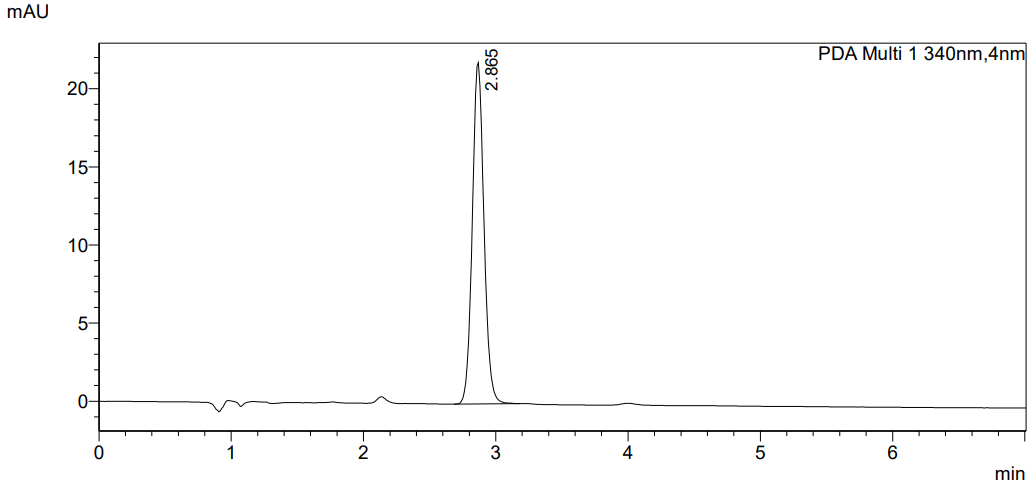
The determination of piperine in black pepper samples using High performance liquid chromatography (HPLC) was successfully performed and validated. The method demonstrated specificity and good linearity in the concentration range of 1 - 6 mg/L with a coefficient of determination (R2) of 0.9998. Accuracy was evaluated through %recovery studies and obtaining results between 100.25 - 101.65%. The precision expressed as a relative standard deviation (%RSD), showed good repeatability for both intra-day and inter-day analyses, with %RSD values less than 5%. The limit of detection (LOD) and the limit of quantitation (LOQ) were 0.99 and 1.09 mg/L, respectively. The linearity, percent recovery, precision, LOD and LOQ values were acceptable and complied with AOAC guidelines for single laboratory, validation of chemical methods for dietary supplements and botanicals. Measurement uncertainty was calculated as 3.49% at a 95% confidence interval (k=2). All results presented that the method was reliable and suitable for the determination of piperine in black pepper sample. Subsequently, 28 black pepper samples from various sources were analyzed using a validated method. The results showed that piperine content ranged from 3.15% to 6.41% w/w, with 20 samples (71.4%) meeting the Thai Industrial Standard (TIS. 297-2556) requirement of piperine content ≥4%. The results demonstrate that the proposed HPLC technique for analyzing piperine content in black pepper samples is effective and can be applied to samples from various sources. Furthermore, the data from this study can serve as a guideline for the quality control of Thai herbal raw materials and extracts, ensuring compliance with standard requirements and enhancing global competitiveness.
References
ศูนย์เทคโนโลยีสารสนเทศและการสื่อสาร, สำนักงานปลัดกระทรวงพาณิชย์, กรมศุลกากร. การส่งออกพริกไทยของไทย. 2562.
อารยา ข้อค้า. สารพฤกษเคมีจากพริกไทยดำและฤทธิ์ทางเภสัชวิทยา. วารสารวิทยาศาสตร์และเทคโนโลยี. 2560;1(2):28-39.
Srinivasan K. Black pepper and its pungent principle-piperine: A review of diverse physiological effects. Crit Rev Food Sci Nutr. 2007;47(8):735-48. doi: 10.1080/10408390601062054.
Luerueang K, Rochoanapo M, Klangprapun S. Phytochemical composition and pharmacological activities of herbal ingredients in Trikatuk remedy. J Tradit Thai Med Res. 2019;5(2):1-19.
อุดมลักษณ์ อุ่นจิตต์วรรธนะ, สานิตย์ สุขสวัสดิ์, อาภรณ์ เจียมสายใจ, มณี ชิงดวง. วิจัยชนิดและปริมาณสารสำคัญในพริกไทยพันธุ์ต่าง ๆ จากแหล่งต่าง ๆ และอายุแตกต่างกัน. กรุงเทพฯ: สำนักวิจัยและพัฒนาปัจจัยการผลิตทางการเกษตร กรมวิชาการเกษตร; 2547.
Chopra B, Dhingra AK, Kapoor RP, Prasad DN. Piperine and its various physicochemical and biological aspects: A review. Open Chem J. 2016;3:1-8. doi: 10.2174/1874842201603010075.
Sozzi GO, Peter KV, Babu KN, Divakaran M. Capers and caperberries. In: Handbook of herbs and spices. 2nd ed. Cambridge: Elsevier; 2012. P. 193-224
Pruthi JS. Major spices of India: Crop management and post-harvest technology. India: Allied publishers; 1993.
Tavares WS, Cruz I, Petacci F, Freitas SS, Serrão JE, Zanuncio JC. Insecticide activity of piperine: Toxicity to eggs of Spodoptera frugiperda (Lepidoptera: Noctuidae) and Diatraea saccharalis (Lepidoptera: Pyralidae) and phytotoxicity on several vegetables. J Med Plants Res. 2011;5(21):5301-6.
Zarai Z, Boujelbene E, Salem NB, Gargouri Y, Sayari A. Antioxidant and antimicrobial activities of various solvent extracts, piperine and piperic acid from Piper nigrum. LWT-Food Sci Technol. 2013;50(2):634-41. doi: 10.1016/j.lwt.2012.07.036.
Bang JS, Oh DH, Choi HM, Sur BJ, Lim SJ, Kim JY, et al. Anti-inflammatory and antiarthritic effects of piperine in human interleukin 1β-stimulated fibroblast-like synoviocytes and in rat arthritis models. Arthritis Res Ther. 2009;11(2):R49. doi: 10.1186/ar2662.
กรมวิทยาศาสตร์การแพทย์, สถาบันวิจัยสมุนไพร. คู่มือการตรวจวิเคราะห์ด้านเคมีของสมุนไพร เล่ม 2. นนทบุรี: กระทรวงสาธารณสุข; 2564. น. 55.
กระทรวงอุตสาหกรรม. ประกาศกระทรวงอุตสาหกรรม ฉบับที่ 4552 (พ.ศ. 2556) เรื่อง ยกเลิกและกำหนดมาตรฐานผลิตภัณฑ์อุตสาหกรรมพริกไทย. ราชกิจจานุเบกษา เล่มที่ 130 ตอนพิเศษ 93 ง, 1 สิงหาคม 2556. 4.
American Spice Trade Association. ASTA analytical methods, Method 12.1: Piperine content of black and white pepper, their oleoresins and soluble pepper seasonings. 2018. p. 51-54.
Ministry of Public Health, Department of Medical Sciences, Bureau of Drug and Narcotic. Thai herbal pharmacopoeia. Bangkok: Ministry of Public Health; 2020.
Upadhyay V, Sharma N, Joshi HM, Malik A, Mishra M, Singh BP, et al. Development and validation of rapid RP-HPLC method for estimation of piperine in Piper nigrum L. Int J Herbal Med. 2013;1(4):6-9.
Shrestha S, Chaudhary N, Sah R, Malakar N. Analysis of piperine in black pepper by high performance liquid chromatography. J Nepal Chem Soc. 2020;41(1):80-6. doi: 10.3126/jncs.v41i1.30492.
Hamrapurkar PD, Jadhav K, Zine S. Quantitative estimation of piperine in Piper nigrum and Piper longum using high performance thin layer chromatography. J Appl Pharm Sci. 2011;1(3):117-20.
Banerjee S, Tudu B, Naskar H, Mandal D, Bandyopadhyay R, Das N, et al. Detection of piperine content in black pepper using a molecular imprinted poly(N,N-dimethylacrylamide) embedded graphite electrode: A machine learning based prediction approach. Microchem J. 2024;207:111914. doi: 10.1016/j.microc.2024.111914.
AOAC International. AOAC guidelines for single laboratory validation of chemical methods for dietary supplements and botanicals. Rockville (MD): AOAC International; 2019.
International Organization for Standardization (ISO). Pepper and pepper oleoresins – Determination of piperine content – Method using high-performance liquid chromatography. ISO 11027:1993. Geneva: ISO; 1993.
Barwick VJ, Ellison SLR. VAM Project 3.2.1 Development and harmonisation of measurement uncertainty principles part (d): Protocol for uncertainty evaluation from validation data version 5.1. LGC/VAM/1998/088. Teddington (UK): LGC (Tedddington) Limited; 2000.
Downloads
Published
How to Cite
Issue
Section
License
Copyright (c) 2025 Bulletin of Applied Sciences

This work is licensed under a Creative Commons Attribution-NonCommercial-NoDerivatives 4.0 International License.