Determination of technical measurement uncertainty and method verification for coliform detection using the Multiple Tube Fermentation method in drinking water in sealed containers, ice, and raw water samples
DOI:
https://doi.org/10.60136/bas.v15.2026.4074Keywords:
Verification ISO 16140, Intralaboratory reproducibility standard deviation, Estimated bias (eBias)Abstract
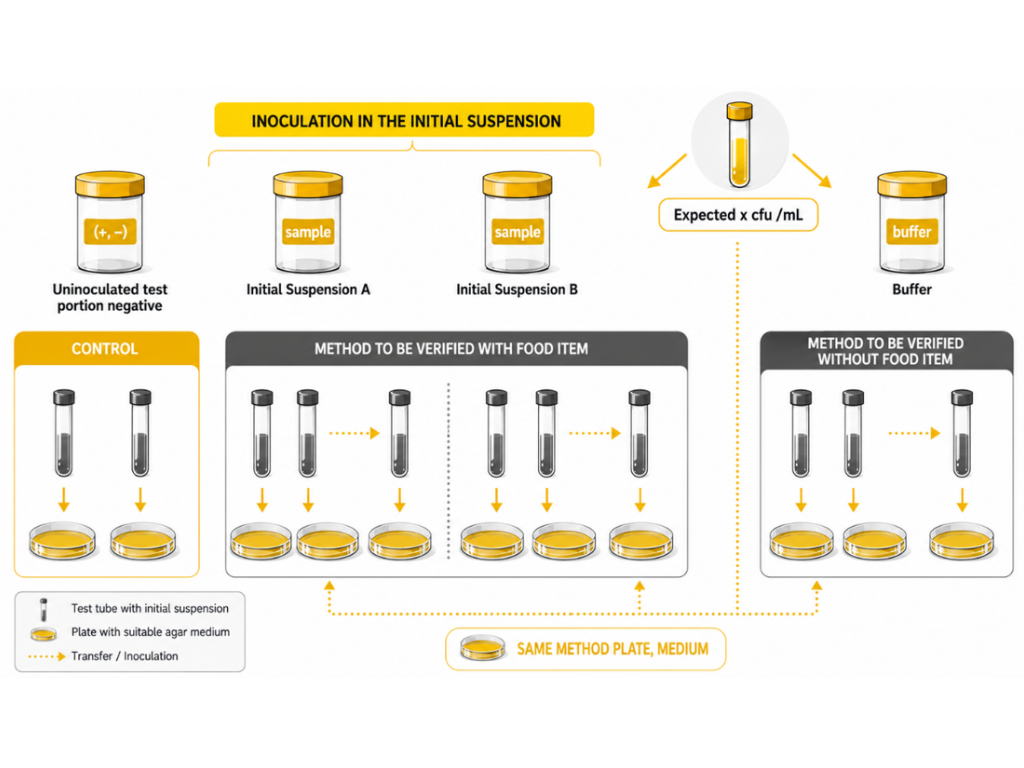
Coliform bacteria are a group of microorganisms commonly used as bacteriological indicators for assessing the microbiological quality and hygiene of water and food products. However, most laboratories in Thailand still lack verification data for microbiological analytical methods in accordance with ISO 16140-3:2021, which is essential for enhancing laboratory competence and supporting ISO/IEC 17025 accreditation. The determination of the Standard Deviation for Intralaboratory Reproducibility (SIR) and the method verification serves as definitive evidence that a laboratory can competently perform reference methods to ensure accurate and reliable results for clients. This study aimed to evaluate laboratory capability in quantifying coliform bacteria across various water samples, including bottled drinking water, ice, raw water, food-contact surface water, and deionized (DI) water. The evaluation determined the SIR and the Estimated bias (eBias) using the Multiple Tube Fermentation (MTF) method based on ISO 16140-3:2021 protocol for the verification of reference methods in a single laboratory. Three inoculation levels were evaluated: low (1 cfu/mL), medium (10 cfu/mL), and high (20 cfu/mL). The results revealed an overall SIR of 0.14. The eBias values for Group (A) samples were 0.00, 0.30, and 0.05 Log10 MPN/100 mL; for Group (B) samples were 0.18, 0.01, and 0.02 Log10 MPN/100 mL; and for Group (C) samples were 0.12, 0.06, and 0.05 Log10 MPN/100 mL, respectively. The method verification demonstrated that both SIR and the eBias values across all water types complied with the acceptability limit of ≤0.5 Log10 MPN/100 mL specified by ISO 16140-3:2021. This confirms that the laboratory can successfully implement the MTF method according to APHA, AWWA, and WEF standards with high accuracy and reliability. Consequently, these findings support the laboratory's application for ISO/IEC 17025:2017 accreditation and demonstrate that this verified MTF technique is highly suitable for drinking water quality surveillance systems to protect public health.
References
Jena GB, Chavan S. Implementation of Good Laboratory Practices (GLP) in basic scientific research: Translating the concept beyond regulatory compliance. Regulatory Toxicology and Pharmacology. 2017;89:20-25. https://doi.org/10.1016/j.yrtph.2017.07.010
Anastasopoulos G. The new ISO/IEC 17025:2017. CAL LAB: The International Journal of Metrology. 2017;30-35.
Trishch R, Maletska O, Hrinchenko H, Artiukh S, Burdeina V, Antonenko N. Development and validation of measurement techniques according to ISO/IEC 17025:2017. In: 2019 IEEE 8th International Conference on Advanced Optoelectronics and Lasers (CAOL); 2019 Sep 6–8; Sozopol, Bulgaria. p. 1-6. https://doi.org/10.1109/CAOL46282.2019.9019539
Mehta B. Implementing ISO/IEC 17025:2017. 2nd ed. Milwaukee: ASQ Quality Press; 2019.
American Public Health Association (APHA). Standard methods for the examination of water and waste water. 20th ed. Washington (DC): APHA; 1998.
American Public Health Association (APHA). Standard methods for the examination of water and sewage. 2nd ed. New York: APHA; 1912.
Lombard B. ISO Standardization and validation of reference testing methods—Validation of alternative methods in food microbiology. Japanese Journal of Food Microbiology. 2010;27(1):8-20. https://doi.org/10.5803/jsfm.27.8
Honsa JD, McIntyre DA. ISO 17025: Practical benefits of implementing a quality system. Journal of AOAC International. 2003;86(5):1038-1044. https://doi.org/10.1093/jaoac/86.5.1038
International Organization for Standardization (ISO). Microbiology of the food chain – Method validation – Part 3: Protocol for the verification of reference methods and validated alternative methods in a single laboratory. (ISO 16140-3:2021). Geneva: ISO; 2021.
Lombard B, Leclercq A. Validation of innovative food microbiological methods according to the EN ISO 16140 standard. Food Analytical Methods. 2011;4:163-172. https://doi.org/10.1007/s12161-010-9154-4
Paruch AM, Mæhlum T. Specific features of Escherichia coli that distinguish it from coliform and thermotolerant coliform bacteria and define it as the most accurate indicator of faecal contamination in the environment. Ecological Indicators. 2012;23:140-142. https://doi.org/10.1016/j.ecolind.2012.03.026
Edberg SC, Rice EW, Karlin RJ, Allen MJ. Escherichia coli: The best biological drinking water indicator for public health protection. Journal of Applied Microbiology. 2000;88(S1):106S-116S. https://doi.org/10.1111/j.1365-2672.2000.tb05338.x
Leclerc H, Mossel DAA, Edberg SC, Struijk CB. Advances in the bacteriology of the coliform group: Their suitability as markers of microbial water safety. Annual Reviews of Microbiology. 2001;55:201-234. https://doi.org/10.1146/annurev.micro.55.1.201
World Health Organization (WHO). Guidelines for drinking-water quality: Incorporating the first and second addenda. Geneva: WHO; 2022.
Ahmed T, Baidya S, Acharjee M, Rahman T. Qualitative analysis of drinking water through the most probable number (MPN) method. Stamford Journal of Microbiology. 2013;3(1):9-16. https://doi.org/ https://doi.org/10.3329/sjm.v3i1.22745
International Organization for Standardization (ISO). Microbiology of the food chain - Horizontal method for the detection and enumeration of Enterobacteriaceae - Part 2: Colony-count technique. (ISO 21528-2:2017). Geneva: ISO; 2017.
Nagur KS, Surati S, Sitorus AAM, Cahyaningsih E, Putri F, Wilasti Y. Implementation of ISO 16140-3:2021 for enumeration of Enterobacteriaceae in food products. Journal of Food and Drug Safety. 2023;4(1):88-96. https://doi.org/10.54384/eruditio.v4i1.195
Downloads
Published
How to Cite
Issue
Section
License
Copyright (c) 2025 Bulletin of Applied Sciences

This work is licensed under a Creative Commons Attribution-NonCommercial-NoDerivatives 4.0 International License.