Improving coconut fiber sheet performance via stepwise chemical treatments
DOI:
https://doi.org/10.60136/bas.v15.2026.4060Keywords:
Coconut fiber, Chemical treatment, Composite materials, Polyvinyl alcohol, Mechanical propertiesAbstract
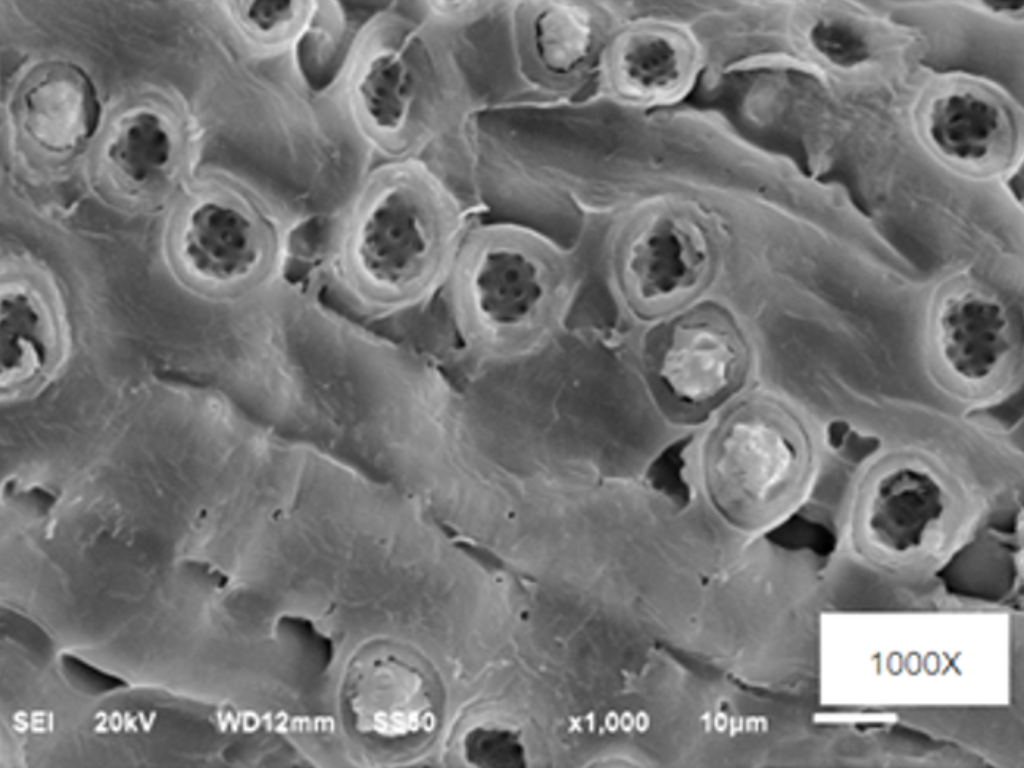
Coconut fibers have gained increasing attention due to their sustainability, eco-friendly characteristics, and potential as a reinforcing component in composite materials. However, coconut fibers possess a hydrophilic nature, a heterogeneous structure, and poor interfacial adhesion with matrix materials. Therefore, surface modification is essential to enhance their properties before application. This research aims to improve the physical, mechanical, hydrophobic, and interfacial adhesion properties of coconut fibers for the development of interior decorative wall panels, using polyvinyl alcohol (PVA) as a binder. Sequential chemical surface treatments were investigated using potassium permanganate combined with sulfuric acid and benzoyl chloride as well as a treatment sequence starting with sodium hydroxide followed by potassium permanganate combined with sulfuric acid and benzoyl chloride. The morphological characteristics of the fibers were analyzed using scanning electron microscopy (SEM) and the elemental composition was detected by energy-dispersive X-ray spectroscopy (EDX). Physical and mechanical properties of the fiber sheets were underwent testing. The sodium hydroxide pre-treatment effectively removed some of the outer layer of fibers that were damaged and peeled off during the grinding process, resulting in improved accessibility of reactive sites for subsequent chemical modifications and reduced water absorption. Subsequent oxidation with potassium permanganate combined with sulfuric acid increased surface roughness and surface area, leading to a significant enhancement in tensile strength and interfacial bonding with the PVA matrix. In the final step with benzoyl chloride treatment, the hydrophilicity was reduced and the flame-retardant properties were improved, although a slight decrease in tensile strength was observed. Overall, the results indicate that sequential chemical modification significantly influences the structural, morphological, physical, and mechanical properties of coconut fibers and coconut fiber sheets. The most effective treatment was the sodium hydroxide pre-treatment followed by potassium permanganate / sulfuric acid oxidation, which provided optimal improvement for composite applications requiring high mechanical strength, reduced water absorption, and enhanced fiber–matrix interfacial adhesion with PVA binders.
References
Bhattacharya SS, Parmar PM. Effect of chemical treatment on physical and mechanical properties of coconut fibre. SAMRIDDHI: A Journal of Physical Sciences, Engineering and Technology. 2022;14(4):1–5. https://doi.org/10.18090/samriddhi.v14i04.32
Nissar M, Chethan KN, Birjerane YA, Patil S, Shetty S, Das A. Coconut coir fiber composites for sustainable architecture: A comprehensive review of properties, processing, and applications. Journal of Composites Science. 2025;9(10):516. https://doi.org/10.3390/jcs9100516
Sahu P, Tiwari S, Om Prakash S. Surface modifications of natural fibers for use in preparation of biocomposites. SAMRIDDHI:
A Journal of Physical Sciences, Engineering and Technology. 2021;13(1):26–34. https://doi.org/10.18090/samriddhi.v13i01.6
Samanth M, Bhat KS. Conventional and unconventional chemical treatment methods of natural fibres for sustainable biocomposites. Sustainable Chemistry for Climate Action. 2023;3:100034. https://doi.org/10.1016/j.scca.2023.100034
Arsyad M, Soenoko R. The effects of sodium hydroxide and potassium permanganate treatment on roughness of coconut fiber surface. In: International Mechanical and Industrial Engineering Conference 2018 (IMIEC 2018); 2018 Aug 30-31; State University of Malang, Indonesia. p. 05004. https://doi.org/10.1051/matecconf/201820405004
Pannu AS, Singh S, Dhawan V. Effect of alkaline treatment on mechanical properties of biodegradable composite (BF/PLA) rod. Materials Today: Proceedings. 2021;46(19):9367–9371. https://doi.org/10.1016/j.matpr.2020.02.912
Verma D, Goh KL. Effect of mercerization/alkali surface treatment of natural fibres and their utilization in polymer composites: Mechanical and morphological studies. Journal of Composites Science. 2021;5(7):175. https://doi.org/10.3390/jcs5070175
Madhushree M, Vairavel P, Mahesha GT, Bhat KS. Oxidative modifications of cellulose: Methods, mechanisms, and emerging applications. Journal of Natural Fibers. 2025;22(1):2497910. https://doi.org/10.1080/15440478.2025.2497910
Mohammed AA, Bachtiar D, Rejab MRM, Hasany SF. Effect of potassium permanganate on tensile properties of sugar palm fibre reinforced thermoplastic polyurethane. Indian Journal of Science and Technology. 2017;10(7):1–5. https://doi.org/10.17485/ijst/2017/v10i7/111453
Birniwa AH, Abdullahi SS, Ali M, Mohammad REA, Jagaba AH, Amran M, et al. Recent trends in treatment and fabrication of plant-based fiber-reinforced epoxy composite: A review. Journal of Composites Science. 2023;7(3):120. https://doi.org/10.3390/jcs7030120
Budiyati E, Saputri FZ, Prasasti RIK, Elwin MR. Study on varied bagasse fiber and epoxy resin compositions with rice bran filler to biocomposite characteristics. JKPK (Jurnal Kimia dan Pendidikan Kimia). 2024;9(1):102–114. https://doi.org/10.20961/jkpk.v9i1.72587
Kavitha SA, Priya RK, Arunachalam KP, Avudaiappan S, Saavedra Flores EI, Blanco D. Experimental investigation on strengthening of Zea mays root fibres for biodegradable composite materials using potassium permanganate treatment. Scientific Reports. 2024;14:12754. https://doi.org/10.1038/s41598-024-58913-y
Boussehel H, Guerira B, Jawaid M, Fouad H, Khiari R. Effect of benzoyl chloride treatment on morphological, thermal, mechanical, and hydrothermal aging properties of date palm/polyvinyl chloride (PVC) composites. Scientific Reports. 2024;14:20384. https://doi.org/10.1038/s41598-024-71489-x
Babayo H, Musa H, Garba MD. Fabrication of benzoyl chloride treated tiger-nut fiber reinforced insect repellent hybrid composite. Scientific Reports. 2022;12:8797. https://doi.org/10.1038/s41598-022-12876-0
Abisha M, Priya RK, Arunachalam KP, Avudaiappan S, Saavedra Flores EI, Parra PF. Biodegradable green composites: Effects of potassium permanganate (KMnO4) treatment on thermal, mechanical, and morphological behavior of Butea Parviflora (BP) fibers. Polymers. 2023;15(9):2197. https://doi.org/10.3390/polym15092197
Li X, Tabil LG, Panigrahi S. Chemical treatments of natural fiber for use in natural fiber-reinforced composites: A review. Journal of Polymers and the Environment. 2007;15:25–33. https://doi.org/10.1007/s10924-006-0042-3
Olusanya SO, Ajayi SM, Sodeinde KO, Fapojuwo DP, Atunde MO, Diduyemi AE, et al. Hydrophobic modification of cellulose from oil palm waste in aqueous medium. Polymer Bulletin. 2024;81:1349-1371. https://doi.org/10.1007/s00289-023-04756-y
Gil H, Zuleta AA, Reyes DE. Mechanical properties and sustainability aspects of coconut fiber modified concrete.
Scientia et Technica. 2021;26(1):64–70. https://doi.org//10.22517/23447214.22901
Bachtiar D, Mohammed AA, Palanisamy S, Imran AI, Siregar JP, Rejab MRM, et al. Effect of alkaline treatment on the thermal and mechanical properties of sugar palm fibre reinforced thermoplastic polyurethane composites. Scientific Reports. 2025;15:14085. https://doi.org/10.1038/s41598-025-99227-x
Osman Z, Elamin M, Ghorbel E, Charrier B. Influence of alkaline treatment and fiber morphology on the mechanical, physical, and thermal properties of polypropylene and polylactic acid biocomposites reinforced with kenaf, bagasse, hemp fibers and softwood. Polymers. 2025;17(7):844. https://doi.org/10.3390/polym17070844
Pulkkinen I, Alopaeus V, Fiskari J, Joutsimo O. The use of fibre wall thickness data to predict handsheet properties of eucalypt pulp fibres. O Papel (Brazil). 2008;69(10):71–85.
Xiao N, Zheng X, Song S, Pu J. Effects of complex flame retardant on the thermal decomposition of natural fiber. BioResources. 2014;9(3):4924–4933. https://doi.org/10.15376/biores.9.3.4924-4933
Downloads
Published
How to Cite
Issue
Section
License
Copyright (c) 2025 Bulletin of Applied Sciences

This work is licensed under a Creative Commons Attribution-NonCommercial-NoDerivatives 4.0 International License.