
Physical Properties of Paving Bricks Mixed with Marble Powder and Marble Flakes
Article Sidebar
Main Article Content
Abstract
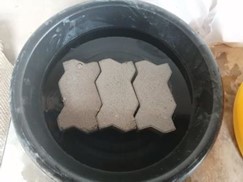
The purpose of this research is to make use of waste marble powder and shards from the marble business in Prankratai District, Kamphaeng Phet Province. by fabricating a paving block in the Uni Pave 11 x 22 x 6 cm shape. Investigate the physical qualities of the brick paving that is possible. It was discovered that the paving bricks with the highest mass ratio of mixture were the best test values are obtained when the ratio of cement to sand, marble powder, and marble flake is 0.5: 0.4: 0: 0.1 kg. It is 1.90 g/cm3 dense, 6.85\% water absorption rate, and has 34.06 MPa compressive strength. The use of cement as an adhesive agent between the mixture and the paving bricks increases the hardness of the paving bricks. Marble flakes increase the gaps within the brick, enhancing drainage and decreasing water absorption. The use of cement as an adhesive agent between the mixture and the paving bricks increases the hardness of the paving bricks. Marble flakes expand the gaps within the brick, enhancing drainage and decreasing water absorption. it is suitable for usage as a brick-paved pathway or decorative purposes.
Article Details

This work is licensed under a Creative Commons Attribution-NoDerivatives 4.0 International License.
บทความที่ได้รับการตีพิมพ์เป็นลิขสิทธิ์ของวารสาร มรภ.กพ. วิทยาศาสตร์ คณิตศาสตร์ และเทคโนโลยี
ข้อคิดเห็นใดๆ ที่ปรากฎในวารสารเป็นวรรณกรรมของผู้เขียนโดยเฉพาะ ซึ่งมหาวิทยาลัยราชภัฏกำแพงเพชรและบรรณาธิการไม่จำเป็นต้องเห็นด้วย
References
นงลักษณ์ จันทร์พิชัย. (2561). สมบัติทางกายภาพและสมบัติเชิงกลของหินอ่อนเขาสว่างอารมณ์ อำเภอพรานกระต่าย จังหวัดกำแพงเพชร. สักทอง วารสารวิทยาศาสตร์และเทคโนโลยี, 5(2), 55-63.
สุทธินี โฆษิตานนท์. (2554). การพัฒนาสูตรน้ำเคลือบผลิตภัณฑ์กระเบื้องจากผงหินอ่อนบ้านเขาสว่าง อำเภอพรานกระต่าย จังหวัดกำแพงเพชร. กำแพงเพชร: สาขาวิชาเทคโนโลยีอุตสาหกรรมเพื่อพัฒนาท้องถิ่น มหาวิทยาลัยราชภัฏกำแพงเพชร.
เอกสิทธิ์ เทียนมาศ และ สุรเชษฐ์ ตุ้มมี. (2562). การศึกษาสมบัติของแผ่นคอนกรีตปูพื้นทางเท้าผสมผงหินอ่อน. สักทอง วารสารวิทยาศาสตร์และเทคโนโลยี, 6(1), 73-82.
อาทร ชูพลสัตย์ และ ณิชาภา มินาบูลย์. (2561). การพัฒนาเพื่อเพิ่มคุณสมบัติของบล็อกปูพื้นที่ผลิตจากการหมุนเวียนวัสดุชั้นทางเดิมมาใช้งานใหม่ (รายงานผลการวิจัย). นครปฐม: มหาวิทยาลัยเทคโนโลยีราชมงคลรัตนโกสินทร์.
ณัฐวุฒิ อินทบุตร. (2561). การศึกษาและพัฒนาอิฐบล็อกประสานจากดินตะกอนที่เหลือทิ้งในการผลิตน้ำประปาและผักตบชวา (รายงานการวิจัย). สุพรรณบุรี: มหาวิทยาลัยเทคโนโลยีราชมงคลสุวรรณภูมิ.
สำนักงานมาตรฐานผลิตภัณฑ์อุตสาหกรรม กระทรวงอุตสาหกรรม. (2557). มาตรฐานเลขที่ มอก. 827-2531คอนกรีตบล็อกประสานปูพื้น. กรุงเทพฯ: กระทรวงอุตสาหกรรม. สืบค้น 25 กุมภาพันธ์ 2562. จาก https://www.tisi.go.th/data/PR/pdf/R827_2531_00.pdf
