
A Chemical Composition Analysis to Determine the Identity of Cocoa in Chiang Rai Province
Article Sidebar
Main Article Content
Abstract
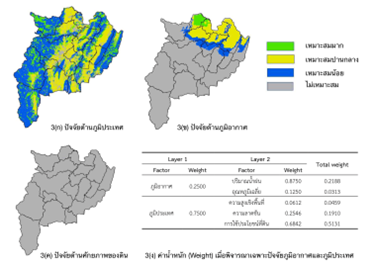
A study of production knowledge database about cocoa in Chiangrai province aims to survey the basic information of cocoa growing in Chiangrai province. For the study of the land suitability of cocoa in Chiang Rai Province, the estimation of soil potential is the most important part. The results of soil quality analysis of cocoa plantations from the sample plantations shown that the soil characteristics was dark brown and the moisture in soil at low level making the soil dry. The pH range was in the suitable condition for cocoa planting and the organic substances was at low level. In the case of cocoa planting, should frequently maintain the nutrients in soil. The results of total microbial such as yeast and fungi in cocoa in the production process in raw cocoa seed, fermented cocoa, roasted cocoa and powdered cocoa have been investigated in the level of standard pass. Moreover, contamination of Escherichia coli and Ochratoxin A were not found in all samples. The result of chemical composition study depicted pH range between 5.22 – 7.19. This was identified as high pH level cocoa according to the longer fermentation. Therefore, it’s getting abnormal taste and odor and cause the production of low molecular weight of lipid including lauric (C-12), oleic (C-16) and palmitic (C-18) by total free lipid acid determination. Moreover, the organic acid such as citric acid can affect the taste and odor relating to the content of volatile organic substances. The contents of reducing sugar found in all samples showed the highest level in the roasted cocoa having passed the fermented and roasted processes without cocoa butter extraction. The investigation of amino profiles and volatile organic substances found contents of aspartic acid and other types of amino acids resulting in the generation of aldehyde enhancement in powdered cocoa, making the increase of odor and taste comparing with raw cocoa. The analysis of various components in the sample garden 1 is a mixed crops such as mulberry, cherry, rice, krachiab, plum, etc. and bees are bred to collect honey. Thus, it’s presents cocoa with a flavor or aroma of flowers (Floral) and honey as aldehyde volatile group shown, mixed with the sourness of the fruit. That is the unique smell and taste of chocolate or cocoa of the sample garden 1.
Article Details

This work is licensed under a Creative Commons Attribution-NoDerivatives 4.0 International License.
บทความที่ได้รับการตีพิมพ์เป็นลิขสิทธิ์ของวารสาร มรภ.กพ. วิทยาศาสตร์ คณิตศาสตร์ และเทคโนโลยี
ข้อคิดเห็นใดๆ ที่ปรากฎในวารสารเป็นวรรณกรรมของผู้เขียนโดยเฉพาะ ซึ่งมหาวิทยาลัยราชภัฏกำแพงเพชรและบรรณาธิการไม่จำเป็นต้องเห็นด้วย
References
สัณห์ ละอองศรี. (2558, 8 สิงหาคม). พันธุ์โกโก้ในประเทศไทย. https://www.cocoathailandcenter.com/
ไทยพีบีเอส. (2561, 23 เมษายน). วิเคราะห์ “โกโก้” พืชเศรษฐกิจใหม่ ร่วงหรือรอด?. https://news.thaipbs.or.th/content/276088?sfns=1
เชียงใหม่นิวส์. (2561, 8 สิงหาคม). ส่งเสริมเกษตรกรปลูกโกโก้ พืชทางเลือกลดเผาป่าภาคเหนือ.https://www.chiangmainews.co.th/page/archives/719132/
ศุภางค์ จำเนียรกุล. (2558). การพัฒนาสารสกัดเปลือกโกโก้เพื่อใช้ในทางเครื่องสำอาง. ภาควิชาวิทยาศาสตร์เครื่องสำอาง คณะวิทยาศาสตร์ มหาวิทยาลัยแม่ฟ้าหลวง.
Anon. (1984). Cocoa Bean (3rd ed.). London. Haines Clark Co.ltd.
V. Barisic, M. Kopjar, A. Jozinovic, I. Flanjak, B. Milicevic, D. Subaric, S. Jokic, J. Babic, D. Ackar, (2019). The chemistry behind Chocolate production. Molecules, 24, 3163.
SoilGrids - global gridded soil information. (2563, 9 สิงหาคม) https://soilgrids.org/
คู่มือการปฏิบัติงาน. (2533). กระบวนการวิเคราะห์ตรวจสอบดินทางเคมี (แก้ไขครั้งที่ 01). กรมพัฒนาที่ดิน.
AOAC (1990). Official Method of Analysis of the Association of Analytical Chemists (15thed.). Association of Official Chemists, U.S.A. p1214.
AOAC (2000). Official methods of analysis, Association of Official Analytical Chemists. Washington DC.
Afoakwa, E.O. (2010). Chocolate Science and Technology. Wiley-Blackwell, Chichester, U.K., 58e71.
กรมวิทยาศาสตร์การแพทย์. (2558). วิธีมาตรฐานสำหรับการวิเคราะห์อาหาร เล่มที่ 3 (Standard Methods for Food Analysis, Volume III) (พิมพ์ครั้งที่ 1).
V. Tournas, M. E. Stack, P. B. Mislivec, H.A. K. R. Bandler (2001). Bacteriological Analytical Manual, (8th Ed.). Revision A, Chapter 18. FDA.
X.W. Qin, J.X. Lai, L.H.Tan, C.Y.Hao, F.P.Li, S.Z. He, Y.H. Song, (2017). Characterization of volatile compounds in Criollo, Forastero, and Trinitario cocoa seeds (Theobroma cacao L.) in China. International Journal of Food Properties, 20 (10), 2261-2275.
M. Padavatan, S. K. Berry, (1979). Amino acid and fatty acid profile of Malaysian cocoa beans during processing. Procceeding of Malaysian Biochemistry Society Conference (5), 137-147.
N. Nael, F.S. Papilaya, (2019). Spatial Analysis of the Land Suitability for Cocoa Plantations in East Dusun District. Journal of Applied Geospatial Information (3), 228-234.
W. Niether, A. Glawe, K. Pfohl, N. Adamtey, M. Schneider, K. Petr, E. Pawelzik, (2020). The effect of short-term vs. long-term soil moisture stress on the physiological response of three cocoa (Theobroma cacao L.) cultivars. Plant Growth Regulation (92), 295-306.
Umaharan, P. (2018). Achieving sustainable cultivation of cocoa (1st ed). London: Burleigh Dodds Science Publishing.
S. Jinap, P.S. Dimick, (1990). Acidic characteristics of fermented and dried cocoa bean from different counties of origin. Journal of Food Science (55), 547-550.
S. Jinap, P. S. Dimick, R. Hollender, (1995). Flavour evaluation of chocolate formulated from cocoa beans from different countries. Food Control (6), 105-110.
A. Lopez, V. C. Quesnel, (1973). Volatile fatty acid production in cocoa fermentation and the effect on chocolate flavor. Journal of Science Agriculture (24), 319-326.
Niimoto, H., Tanitsu, K. (1974). The Quality Assessment of cocoa bean produced in Nigeria, Sabah and Papua New Guiinca. Mneiji Seika Kaishe, Ltd., Tokyo. p121.
Quesnel, V.C. (1972). Cocoa curing in retrospect and proapect (4th). International Cocoa Confonference, St. Augustine, Trinidad.616 p.
อรพิน ภูมิภมร, จันทนา จินดา, บุญให้ แหลมเพชร และ ปิยนุช นาคะ. (2540). การหมักโกโก้ IV : การ ประเมินคุณภาพทางเคมีและประสาทสัมผัสของโกโก้หมักด้วยกล้าเชื้อผสม. วิทยาสารเกษตรศาสตร์ สาขาวิทยาศาสตร์(31), 419-428.
สำนักงานมาตรฐานผลิตภัณฑ์อุตสาหกรรม. มาตรฐานผลิตภัณฑ์อุตสาหกรรม (มอก.1137-2550). โกโก้ผงสำหรับใช้ในอุตสาหกรรม. กระทรวงอุตสาหกรรม
กลุ่มงานวิจัยพืชอุตสาหกรรม. (2563). กลุ่มวิชาการ. สถาบันวิจัยพืชสวน. สถานการณ์การผลิตโกโก้
A. C. Aprotosoaie, (2016). Flavor Chemistry of Cocoa and Cocoa products. Comprehensive Reviews in Food Science and Food Safety (15), 73-91.
