Evaluation of material quality and study of released elements from aluminium electric pan
DOI:
https://doi.org/10.60136/bas.v6.2017.207Keywords:
Aluminium electric pan, Material quality, Released elementAbstract
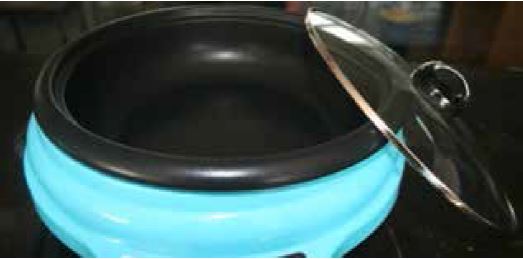
From observations of social media and a question from Office of Consumer Protection Board (OCPB) about contamination of toxic substances from aluminium electric pan because of a change of surface's appearance after using, Department of Science Service collected 13 aluminium electric pan samples (9 samples of type 1 and 4 samples of type 2) from local markets in Bangkok in order to evaluate material quality and study the released elements from electric pan by using 4 stimulants (Dl water, tap water, 1% NaCl and 0.5% citric acid) at boiling condition for 2 hours. Results showed that material of all samples was aluminium alloy and 55 % of type 1 samples did not comply with BS EN 602 standard but all samples of type 2 complied with the standard. The study of released elements from the aluminium electronic pan samples presented that aluminium, iron, manganese, magnesium and zinc released from all samples by using 3 stimulants (tap water, 1% NaCl and 0.5% citric acid). In addition, concentration of released aluminium from all samples of type 1 was higher than specific released limit (SRL), while sample type 2 was less than the limit. In both types, concentrations of iron, magnesium, manganese and zinc were lower than the limit
References
สำนักงานมาตรฐานผลิตภัณฑ์อุตสาหกรรม. มอก.1509-2547. มาตรฐานผลิตภัณฑ์อุตสาหกรรมกระทะไฟฟ้า.
ดวงกมล เชาวน์ศรีหมุด, วรรณภา ตันยืนยงค์ และจิตวิไล เวฬุวนารักษ์. เรื่องเล่าคนเข้าครัว: ภาชนะอะลูมิเนียมในบ้านเรา. วารสารกรมวิทยาศาสตร์บริการ. 2556. 61(193), 14-17.
WEIDENHAMER JEFFREY D., et.al. Metal exposures from aluminium cookware: An unrecognized public health risk in developing countries. Science of the Total Environment. 2017, 579, 805-813.
BRITISH STANDARD INSTITUTION. BS EN 602, 2004. Aluminium and aluminium alloys - wrought products - chemical composition of semi-finished products used for the fabrication of articles for use in contact with foodstuff.
ASTM INTERNATIONAL. ASTM B209-14. Standard specification for aluminum and aluminum alloy sheet and plate.
JEFFERY G.H., J. BASSETT, J. MENDHAM and R.C. DENNEY. Vogel's textbook of quantitative chemical analysis. 5th ed. New York: Wiley, 1989, pp. 486-490.
WORLD HEALTH ORGANIZATION. Evaluations of the joint FAO/WHO Expert committee on food additives: Al [online]. [viewed 24 march 2017]. Available from: http://apps.who.int/food-additives-contaminants-jecfa-database/chemical.aspx?chemID=298
EUROPEAN DIRECTORATE FOR THE QUALITY OF MEDICINE & HEALTHCARE COUNCIL OF EUROPE. Metals and alloys used in food contact materials and article : A practical guide for manufactures and regulators. 2013.
Downloads
Published
How to Cite
Issue
Section
License
Copyright (c) 2022 Bulletin of Applied Sciences

This work is licensed under a Creative Commons Attribution-NonCommercial-NoDerivatives 4.0 International License.