
The Relationship between Time and Hypothermia and Associated Factors of Hypothermia after Anesthesia and Operation in Cats Visited the Animal Hospital of Chiang Rai Rajabhat University
Article Sidebar
Main Article Content
Abstract
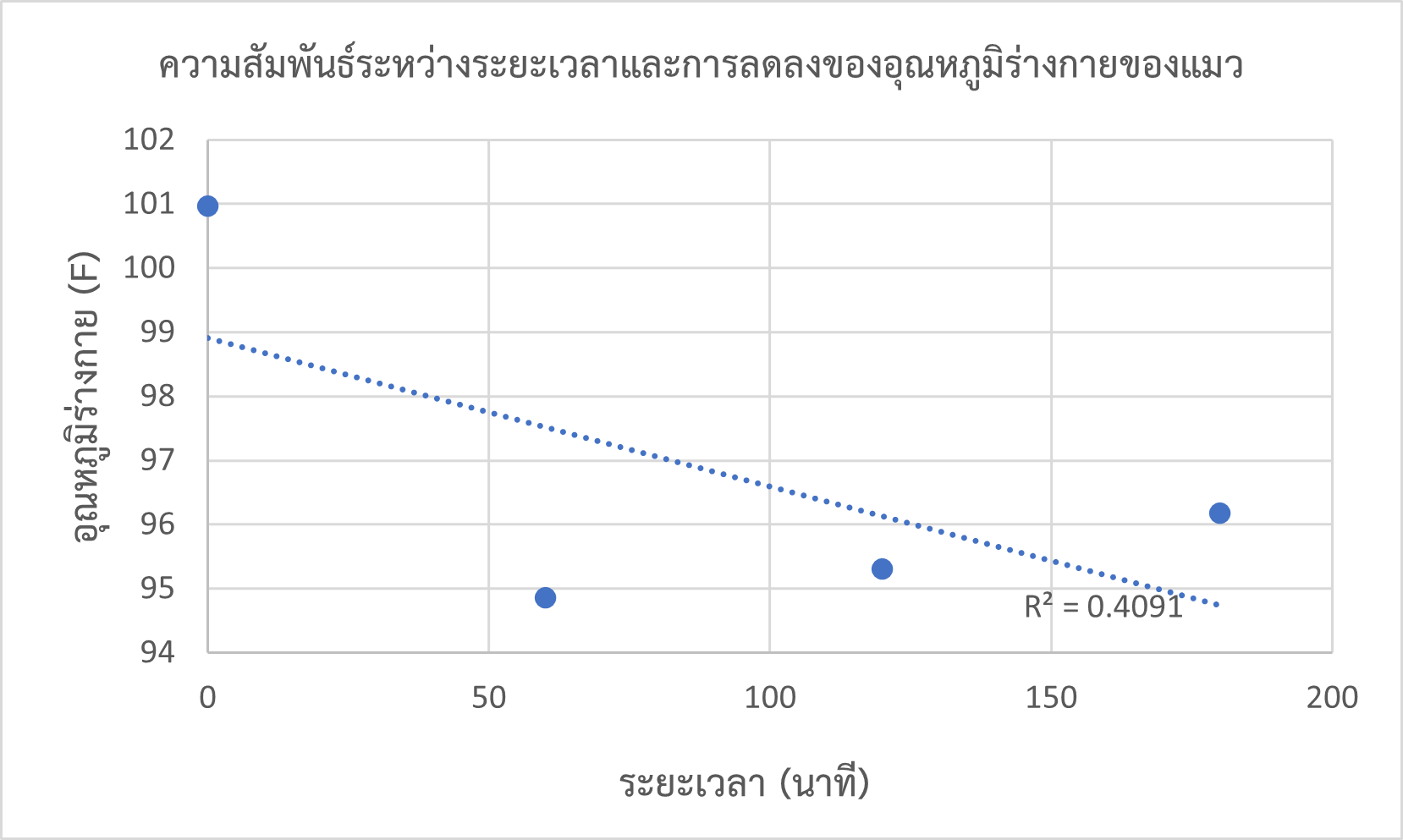
Cross section descriptive study was performed to investigate the relationship between time and hypothermia and to determine associated factors of hypothermia after anesthesia and operation in 46 cats visited the Animal Hospital of Chiang Rai Rajabhat University (CRRU) from April to July 2023. Rectal temperature was measured by using digital thermometer at 0, 60, 120, and 180 minutes after anesthesia and operation, and the associated factors of hypothermia were obtained from the animal medical records. The study revealed that the prevalence of hypothermia after anesthesia and operation in cats was 97.8% (45/46). It was found that after 60 minutes of anesthesia and operation, the cats’ body temperature had the lowest average of 94.854±2.53 ºF. A statistically associated factor of mild, moderate and severe hypothermia was the oxygen exposure (χ2 = 7.095, p-value = 0.029). The study results could be used as a primary and useful information for veterinarians as well as the cat owners in preventing and surveillance of hypothermia after anesthesia and operation in cats.
Article Details

This work is licensed under a Creative Commons Attribution-NoDerivatives 4.0 International License.
บทความที่ได้รับการตีพิมพ์เป็นลิขสิทธิ์ของวารสาร มรภ.กพ. วิทยาศาสตร์ คณิตศาสตร์ และเทคโนโลยี
ข้อคิดเห็นใดๆ ที่ปรากฎในวารสารเป็นวรรณกรรมของผู้เขียนโดยเฉพาะ ซึ่งมหาวิทยาลัยราชภัฏกำแพงเพชรและบรรณาธิการไม่จำเป็นต้องเห็นด้วย
References
Redondo, J. I., Suesta, P., Gil, L., Soler, G., Serra, I. & Soler, C. (2012). Retrospective study of the prevalence of postanaesthetic hypothermia in cats. The Veterinary record. 170(8), 206.
Paulikas, C. A. (2008). Prevention of unplanned perioperative hypothermia. Association of Perioperative Registered Nurses Journal. 88(3), 358-65.
Posner, L. (2007). Perioperative Hypothermiain Veterinary Patients. NAVC Clinician’s Brief, 19-21.
สุพิศ สกุลคง. (2559). ปัจจัยที่มีความสัมพันธ์ต่อการเกิดภาวะอุณหภูมิกายต่ำของผู้ป่วยหลังผ่าตัดระบบทางเดินปัสสาวะในห้องพักฟื้น. วารสารเครือข่ายวิทยาลัยพยาบาลและการสาธารณสุขภาคใต้, 3(2), 195-207.
ภัทรียา รตนะวรรธน์, เพราพิลาส ภักดีดินแดน, พิชญาภาชมแก้ว และสุมิตร ดุรงค์พงษ์ธร. (2552). การศึกษาภาวะอุณหภูมิร่างกายต่ำกว่าในสุนัขเนื่องจากผลของ การระงับความรู้สึกทั่วร่างกายและการทำศัลยกรรม. วารสารสัตวแพทย์ผู้ประกอบการบำบัดโรคสัตว์แห่งประเทศไทย, 20(2), 30-40.
Roe, C. F., Goldberg, M. J., Blair, C. S., & Kinney J. M. (1966). The influence of body temperature on early postoperative oxygen consumption. Surgery, 60, 85.
Haskins, S. C., & Patz, J. D. (1980). Effect of inspired-air warming and humidification in the prevention of hypothermia during general anesthesia in cats. American Journal of Veterinary Research. 41(10), 1669-73.
Hartman, G., & Shaffran, N. (2006). The Postoperative Patient. In: Small Animal Surgical Nursing: Skillsand Concepts. S.J. Busch (ed.) St. Louis: Elsevier Mosby, 287-309.
