
การสร้างแบบจำลองเส้นแรงไฟฟ้าที่มีการเกิดจุดสะเทินของประจุไฟฟ้าชนิดที่เหมือนกันโดยใช้โปรแกรม Mathematica
Article Sidebar
Main Article Content
บทคัดย่อ
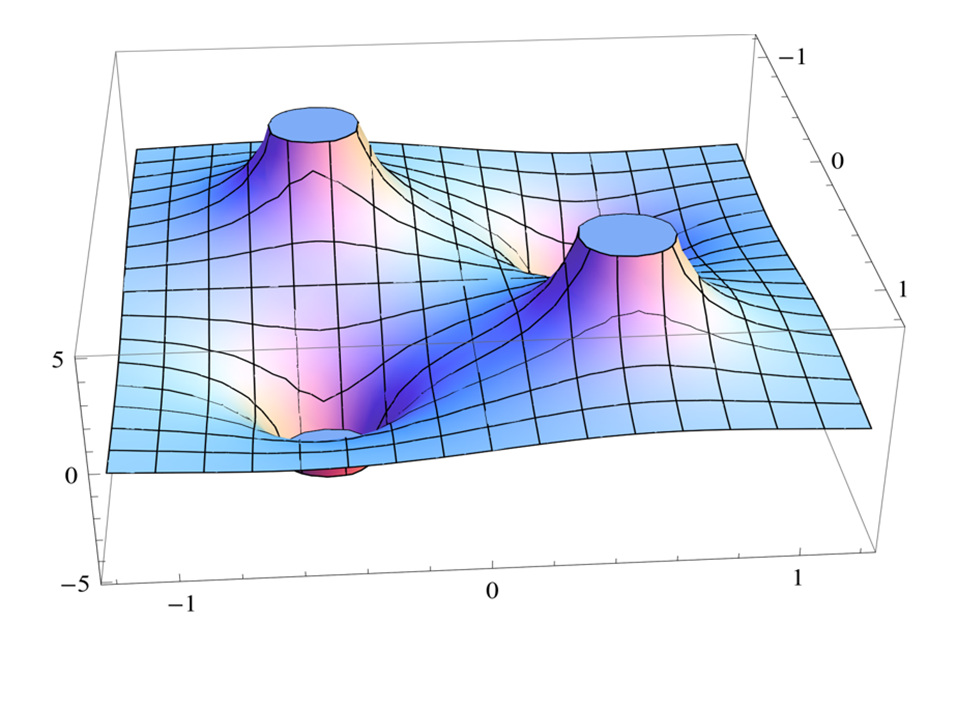
โดยงานวิจัยนี้มีวัตถุประสงค์ เพื่อสร้างแบบจำลองทางคณิตศาสตร์ของ Point Charges, Multipoles ให้เกิดสนามไฟฟ้า จากเส้นแรงไฟฟ้า และเกิดเส้นสมศักย์ ในงานวิจัยนี้ใช้โปรแกรมทางคณิตศาสตร์ สร้างอำนาจของสนามไฟฟ้า และเส้นแรงไฟฟ้า จุดสะเทิน ขั้วคู่ และ 2 ขั้วคู่ ผลการสร้างแบบจำลองสนามไฟฟ้า ทำให้นักศึกษาสามารถเขียนเส้นแรงไฟฟ้า และจุดสะเทินไฟฟ้า โดยดูจากการเขียนตอบอธิบายในข้อสอบแบบอัตนัย นักศึกษาทั้งชั้นเรียน จำนวน 12 คน แต่มีนักศึกษาสามารถเขียนแสดงความเข้าใจเรื่องแรงไฟฟ้า และจุดสะเทินไฟฟ้า ในจำนวน 10 คน คิดเป็นร้อยละ 83
Article Details

อนุญาตภายใต้เงื่อนไข Creative Commons Attribution-NoDerivatives 4.0 International License.
บทความที่ได้รับการตีพิมพ์เป็นลิขสิทธิ์ของวารสาร มรภ.กพ. วิทยาศาสตร์ คณิตศาสตร์ และเทคโนโลยี
ข้อคิดเห็นใดๆ ที่ปรากฎในวารสารเป็นวรรณกรรมของผู้เขียนโดยเฉพาะ ซึ่งมหาวิทยาลัยราชภัฏกำแพงเพชรและบรรณาธิการไม่จำเป็นต้องเห็นด้วย
เอกสารอ้างอิง
ธีรพันธุ์ สุทธิเทพ, และวีรศักดิ์ บุญทน. (2559). สนามแม่เหล็กไฟฟ้า (พิมพ์ครั้งที่ 1). สำนักพิมพ์จุฬาลงกรณ์มหาวิทยาลัย.
Griffiths, D. J. (1999). Introduction to electrodynamics. Prentice Hall.
วุทธิพันธุ์ ปรัชญพฤทธิ์, และสุวรรณ คูสำราญ. (2548). ฟิสิกส์ (แม่เหล็กไฟฟ้า). มูลนิธิส่งเสริมโอลิมปิกวิชาการและพัฒนามาตรฐานวิทยาศาสตร์ศึกษา.
สมพงษ์ ใจดี. (2543). ฟิสิกส์ มหาวิทยาลัย 3 (พิมพ์ครั้งที่ 3). สำนักพิมพ์จุฬาลงกรณ์มหาวิทยาลัย.
Moonsri, P., Pakamwang, J., & Hutem, A. (2022). Calculation of electric charge, electric field, and electric potential of spherical conductors containing volume charge density of the sine function. VRU Research and Development Journal Science and Technology, 17(3), 61–74. https://so06.tci-thaijo.org/index.php/vrurdistjournal/article/view/256963
Hutem, A. (2023). Evaluation of the electric potential in hollow sphere of conductor radius under electric potential on surface hollow sphere of conductor. Journal of KPRU Science Mathematics and Technology, 2(1), 29–38.
Ruhlandt, D., Mühle, S., & Enderlein, J. (2020). Electric field lines of relativistically moving point charges. American Journal of Physics, 88(1), 5. https://doi.org/10.1119/10.0000189
Nogueira, J. R., Alves, R., & Marques, P. C. (2019). Computational programming as a tool in the teaching of electromagnetism in engineering courses: Improving the notion of field. Education Sciences, 9(1), Article 64. https://doi.org/10.3390/educsci9010064
Mayes, E. (1994). Visualizing electrostatic phenomena using Mathematica. Journal of the Arkansas Academy of Science, 48(1), 1–8. https://scholarworks.uark.edu/cgi/viewcontent.cgi?article=1937&context=jaas
Qin, R. (2017). Electric-field-induced alignment of electrically neutral disk-like particles: Modelling and calculation. Scientific Reports, 7, Article 8449. https://doi.org/10.1038/s41598-017-09180-7
