
การผลิตพลาสติกชีวภาพ การใช้ประโยชน์ และผลกระทบ ต่อสิ่งแวดล้อม
Keywords:
BioplasticAbstract
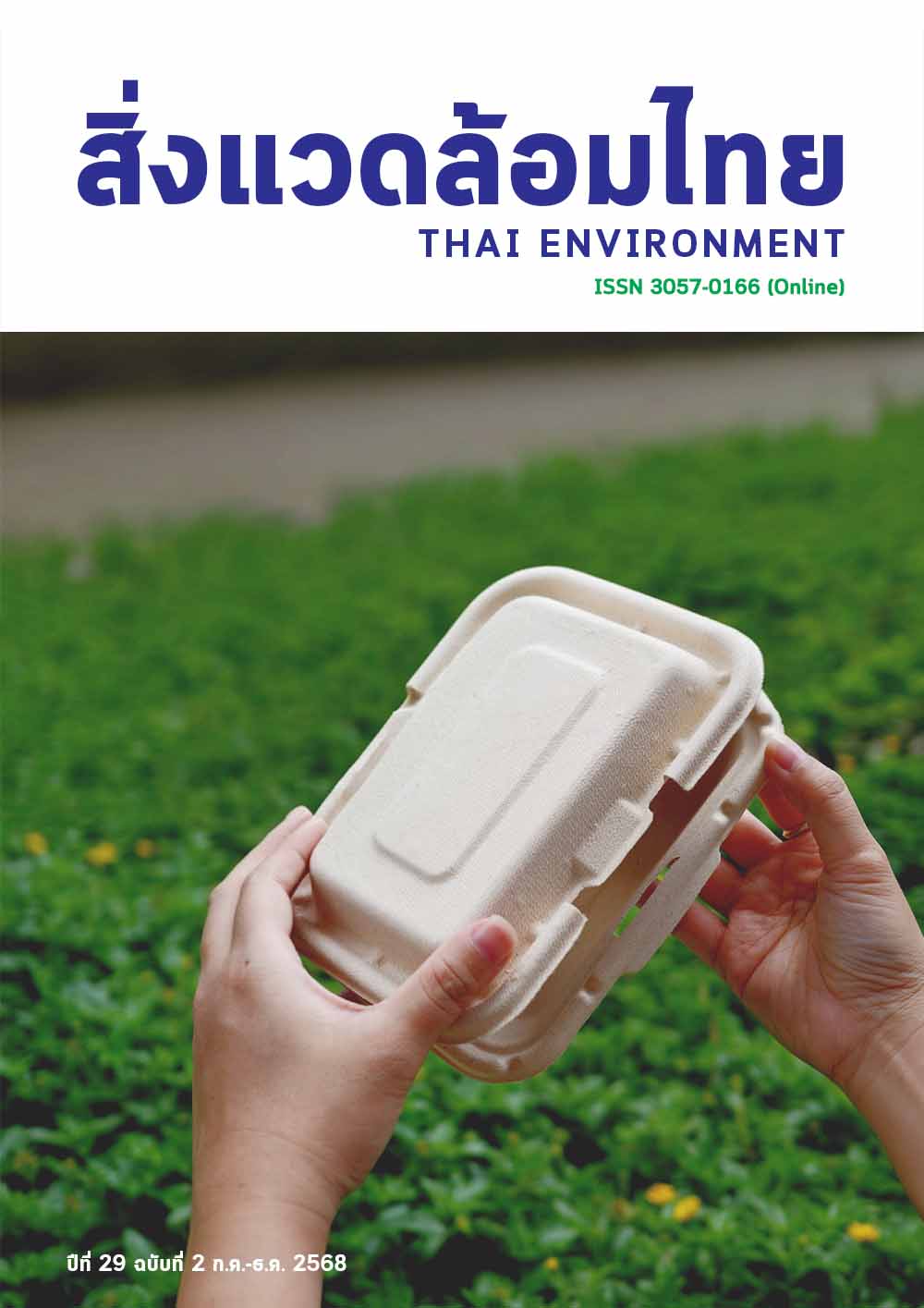
Bioplastic have continuously garnered increasing attention as an alternative material due to the persistent problem of non-biodegradable plastic waste. These materials can be classified into three primary categories including bio-based and biodegradable, petroleum-based and biodegradable, and bio-based and non-biodegradable. The production processes of bioplastics include direct extraction from biomass, microbial fermentation, and synthesis from bio-based monomers. Bioplastics are used in many different industries, with packaging being the largest market segment. Their applications also extend to medical, automotive, and agricultural sectors. The global market for bioplastics demonstrates continuous growth trajectories across these diverse applications. However, while bioplastics are generally considered more environmentally benign than conventional plastics, their production and post-consumer management are associated with significant limitations and potential environmental impacts. These concerns include Adverse land use changes, GHG emissions, and micro/nanoplastic pollution. Consequently, comprehensive management systems are necessitated to ensure the optimal and sustainable utilization of bioplastics.
Downloads
Published
Issue
Section
License
Copyright (c) 2025 Thai Environment

This work is licensed under a Creative Commons Attribution-NonCommercial 4.0 International License.
บทความที่ตีพิมพ์ทั้งหมดได้รับอนุญาตภายใต้ Creative Commons Attribution-NonCommercial 4.0 International License บทความที่ตีพิมพ์อยู่ภายใต้ลิขสิทธิ์ของสิ่งแวดล้อมไทย มีผลบังคับใช้เมื่อบทความได้รับการยอมรับให้ตีพิมพ์ ดังนั้นจะมอบสิทธิ์ทั้งหมดในงานให้กับสิ่งแวดล้อมไทย เพื่อให้ทั้งสองฝ่ายได้รับการคุ้มครองจากผลที่เกิดจากการใช้งานที่ไม่ได้รับอนุญาต การตีพิมพ์บางส่วนหรือทั้งหมดของบทความในที่อื่นเป็นไปได้เฉพาะหลังจากได้รับความยินยอมจากกองบรรณาธิการ

