Effects of Fermentation Additives on Silage Quality, Chemical Composition, and Cyanide Residues of Ensiled Durian Peel as a Roughage Source for Ruminants
DOI:
https://doi.org/10.69650/ahstr.2026.4578Keywords:
Fermented durian peel, chemical composition, ruminant feed, roughage sourceAbstract
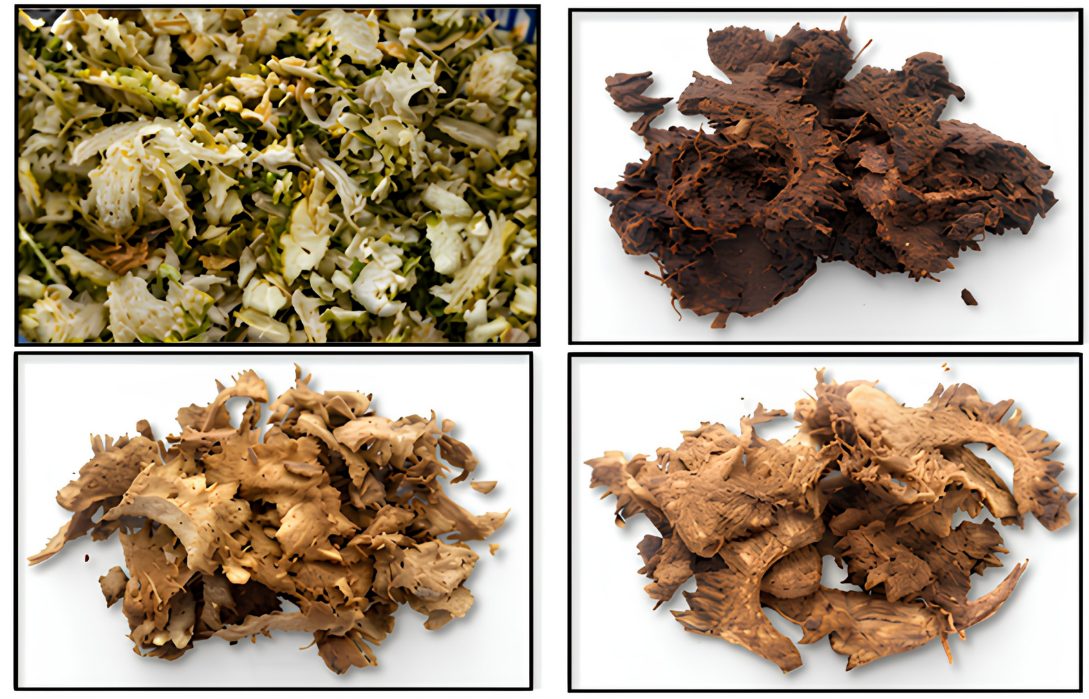
To assess durian peel as a potential ruminant feed resource, this study investigated the effects of various fermentation additives on silage quality, nutrient composition, and feed safety. The experimental design followed a completely randomized design (CRD) with three treatments: yeast, salt, and sodium nitrate. Each additive was applied at 1% of the fresh matter. The experiment was conducted in triplicate, with each replicate serving as an independent fermentation unit prepared in an individual 20-L plastic container. Fresh durian peel was manually chopped into 2–3 cm pieces, thoroughly mixed with the specified additives, and stored under anaerobic conditions for 21 days. Fermentation quality was assessed based on physical characteristics, pH, and residual hydrocyanic acid concentration. Chemical composition was analyzed using standard proximate and fiber analysis. The results showed that all treatments produced silage of acceptable quality, characterized by a favorable fermented aroma and desirable pH values. Residual hydrocyanic acid levels in across ensiled durian peel treatments remained well within safe limits for ruminant feeding. Yeast supplementation yielded the highest crude protein content and enhanced palatability, whereas salt improved physical characteristics, color stability, and gross energy. Notably, sodium nitrate was the most effective additive for reducing fiber fractions and further minimizing cyanide residues. The results indicate that durian peel can be effectively preserved and its nutritional value enhanced through ensiling with appropriate additives. Overall, yeast supplementation yielded in the highest crude protein content, while salt treatments enhanced silage physical quality and energy value. Conversely, sodium nitrate was most effective in treatment reducing fiber fractions and mitigating cyanide residues. The selection of fermentation additives should be tailored to specific production goals, such as maximizing protein content, ensuring feed safety, and optimizing cost-effectiveness. These findings suggest the potential of ensiled durian peel as a sustainable and low-cost potential roughage source for ruminants in tropical regions.
References
AOAC International. (2016). Official methods of analysis of AOAC International (20th ed.). AOAC International.
Borreani, G., Tabacco, E., Schmidt, R. J., Holmes, B. J., & Muck, R. E. (2018). Factors affecting dry matter and quality losses in silages. Journal of Dairy Science, 101(5), 3952–3979. https://doi.org/10.3168/jds.2017-13837
Bureenok, S., Yuangklang, C., Vasupen, K., Schonewille, J. T., & Kawamoto, Y. (2012). The effects of additives in napier grass silage on chemical composition, fermentation characteristics, and in vitro gas production. Asian-Australasian Journal of Animal Sciences, 25(9), 1248–1254. https://doi.org/10.5713/ajas.2012.12139
Department of Livestock Development. (2004). Silage quality assessment guidelines. Ministry of Agriculture and Cooperatives, Thailand.
Food and Agriculture Organization of the United Nations. (2018). Silage for smallholder dairy farmers (FAO Animal Production and Health Manual No. 20). FAO. https://www.fao.org/3/i9658en/I9658EN.pdf
Filya, I., Ashbell, G., Hen, Y., & Weinberg, Z. G. (2004). The effect of lactic acid bacteria and yeast on the fermentation, aerobic stability, and nutritive value of wheat silage. Journal of Applied Microbiology, 96(4), 800–808. https://doi.org/10.1111/j.1365-2672.2004.02213.x
Gamay, R. A. J., Botecario, P. M. N., Sanchez, P. D. C., & Alvarado, M. C. (2024). Durian (Durio zibethinus) waste: A promising resource for food and diverse applications—A comprehensive review. Food Production, Processing and Nutrition, 6, 27.
Gupta, R. C. (2018). Veterinary Toxicology: Basic and Clinical Principles (3rd ed.). Academic Press.
Khan, N. A., Yu, P., Ali, M., Cone, J. W., & Hendriks, W. H. (2021). Nutritive value of silage in ruminant diets: A review. Animal Feed Science and Technology, 279, 114997. https://doi.org/10.1016/j.anifeedsci.2021.114997
Kung, L., Shaver, R. D., Grant, R. J., & Schmidt, R. J. (2018). Silage fermentation and additives. Journal of Dairy Science, 101(5), 3980–4000. https://doi.org/10.3168/jds.2017-13839
Li, Y., Zhang, Y., Jin, Y., Li, Z., & Chen, C. (2020). Effects of nitrate and nitrite on fermentation quality, aerobic stability, and microbial communities of silage. Animal Feed Science and Technology, 268, 114602. https://doi.org/10.1016/j.anifeedsci.2020.114602
McDonald, P., Henderson, A. R., & Heron, S. J. E. (1991). The biochemistry of silage (2nd ed.). Chalcombe Publications.
Muck, R. E., Nadeau, E. M. G., McAllister, T. A., Contreras-Govea, F. E., Santos, M. C., & Kung, L. (2018). Silage review: Recent advances and future uses of silage additives. Journal of Dairy Science, 101(5), 3980–4000. https://doi.org/10.3168/jds.2017-13839
National Academies of Sciences, Engineering, and Medicine. (2016). Nutrient requirements of beef cattle
(8th ed.). National Academies Press. https://doi.org/10.17226/19014
SAS Institute Inc. (1996). SAS/STAT user’s guide (Version 6.12). SAS Institute Inc.
Semae, S., Kraiprom, T., Wamaedeesa, R., Umar, R., Hilae, N., Auseng, A., & Mabu, K. (2024). The durian peel waste as high‑quality feed on goat performance and economic worthiness. International Journal of Science and Innovative Technology, 7(1), 121–128.
Sun, L., Bai, C., Xu, H., Na, N., Jiang, Y., Yin, G., & Liu, S. (2021). Influence of chemical additives on fermentation quality and microbial succession of silage. Fermentation, 7(3), 155. https://doi.org/10.3390/fermentation7030155
Tang, T. K. H., & Nguyen, N. Q. (2025). Investigation of particleboard production from durian husk and bamboo waste. Journal of Composites Science, 9(6), 276.
Van Soest, P. J., Robertson, J. B., & Lewis, B. A. (1991). Methods for dietary fiber, neutral detergent fiber, and nonstarch polysaccharides in relation to animal nutrition. Journal of Dairy Science, 74(10), 3583–3597. https://doi.org/10.3168/jds.S0022-0302(91)78551-2
Weinberg, Z. G., & Muck, R. E. (1996). New trends and opportunities in the development and use of inoculants for silage. FEMS Microbiology Reviews, 19(1), 53–68. https://doi.org/10.1111/j.1574-6976.1996.tb00254.x
Wilkinson, J. M., & Rinne, M. (2018). Highlights of progress in silage conservation and future perspectives. Grass and Forage Science, 73(1), 40–52. https://doi.org/10.1111/gfs.12328
Zhao, J., Wang, S., Yang, Y., Li, J., & Dong, Z. (2022). Yeast-mediated regulation of microbial community and carbohydrate degradation during silage fermentation. Bioresource Technology, 344, 126292. https://doi.org/10.1016/j.biortech.2021.126292
Zhao, Y., Wang, X., Liu, J., Zhang, Y., & Zhou, W. (2020). Relationship between color characteristics and fermentation quality of silage. Animal Feed Science and Technology, 268, 114577. https://doi.org/10.1016/j.anifeedsci.2020.114577
Downloads
Published
How to Cite
License
Copyright (c) 2026 Asian Health, Science and Technology Reports

This work is licensed under a Creative Commons Attribution-NonCommercial 4.0 International License.