A Proposed Equation for Predicting the Heating Value of Thai Bagasse
DOI:
https://doi.org/10.69650/ahstr.2025.4093Keywords:
Thai bagasse, heating value, prediction accuracy, elemental composition, moisture contentAbstract
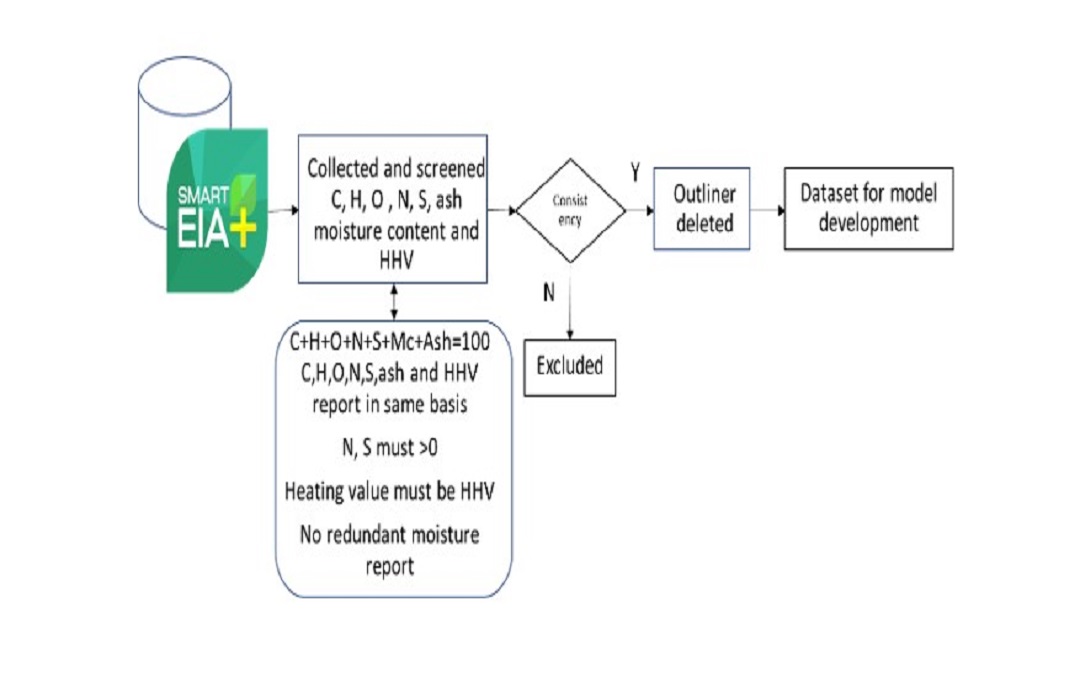
Several empirical equations, such as those by Dulong and Demirbas, have been widely used to estimate the higher heating value (HHV) of fuels from their elemental composition. However, when applied to Thai bagasse, these models exhibited substantial errors, with average deviations exceeding 10% from laboratory-tested values. To address this, 47 sets of elemental composition data for bagasse were compiled from Environmental Impact Assessment (EIA) reports of biomass power plants in Thailand. Two regression-based predictive models tailored to Thai bagasse were developed and evaluated. The performance of the developed models was evaluated against six established equations from international studies using four statistical indicators—Mean Absolute Error (MAE), Mean Bias Error (MBE), Average Bias Error (ABE), and Average Absolute Error (AAE). These indicators were selected to assess both the unsystematic bias and the overall predictive accuracy of the models. The proposed models demonstrated marked improvements, reducing MAE by 3.74% compared to the best existing equation. Model 1 (HHV = 17.137 – 0.161 × Mc) yielded MBE = –0.061 MJ/kg, MAE = 0.52 MJ/kg, ABE = +0.0171%, and AAE = 5.75%, while Model 2 (HHV = 1.496 + 0.157 C + 0.19 O) achieved MBE = +0.037 MJ/kg, MAE = 0.37 MJ/kg, ABE = +0.98%, and AAE = 4.12%. These results confirm that the developed models provide significantly improved HHV prediction accuracy for Thai bagasse, which provides better fuel management for bagasse-based power plants.
References
Basu, P. (2013). Biomass gasification, pyrolysis and torrefaction. Academic Press.
Callejón-Ferre, A. J., Carreño-Sánchez, J., Suárez-Medina, F. J., Pérez Alonso, J., & Velázquez-Martí, B. (2014). Prediction models for higher heating value based on the structural analysis of the biomass of plant remains from the greenhouses of Almería (Spain). Fuel, 116, 377–387. https://doi.org/10.1016/j.fuel.2013.08.023
Channiwala, S. A., & Parikh, P. P. (2002). A unified correlation for estimating HHV of solid, liquid, and gaseous fuels. Fuel, 81(8), 1051–1063. https://doi.org/10.1016/S0016-2361(01)00131-4
Cordedo, T., Marquez, F., Rodriguez-Mirasol, J., & Rodriguez, J. J. (2001). Predicting heating values of lignocellulos and carbonaceous materials from proximate analysis. Fuel, 80, 1567–1571. https://doi.org/10.1016/S0016-2361(01)00034-5
Demirbas, A., Gullu, D., Caglar, A., & Akdeniz, F. (1997). Estimation of calorific values of fuel from lignocellulosics. Energy Sources, 19, 765–770. https://doi.org/10.1080/00908319708908888
Erol, M., Haykiri-Acma, H., & Küçükbayrak, S. (2010). Calorific value estimation of biomass from their proximate analyses data. Renewable Energy, 35, 170–173. http://doi.org/10.1016/j.renene.2009.05.008
Francis, W. (1965). Fuels and fuel technology. Pergamon Press.
García, R., Pizarro, C., Lavín, A. G., & Bueno, J. L. (2014). Spanish bio fuels heating value estimation. Part I: Ultimate analysis data. Fuel, 117, 1130–1138. https://doi.org/10.1016/j.fuel.2013.08.048
Jiménez, L., & Gonzales, F. (1991). Study of the physical and chemical properties of lignocellulosic residues with a view to the production of fuels. Fuel, 70, 947–950. https://doi.org/10.1016/0016-2361(91)90049-G
Junjun, T., Longwei, P., Jiajie, Y., Longfei, L., & Qiang, C. (2023). Reliability analysis of HHV prediction models for organic materials using bond dissociation energies. Polymer, 15, Article 3862. https://doi.org/10.3390/polym15193862
Kikarncharoensin, A., & Innet, S. (2024). Performance inconsistencies in biomass nigher heating value models for ultimate analysis, The Journal of KMUTNB, 34(2), 1-14. https://doi.org/10.14416/j.kmutnb.2024.03.006
Mahmut, D., Ahmet, E., Fatih, G., & Jude, A. O. (2023). Generalizability of empirical correlations for predicting higher heating values of biomass. Energy Sources, Part A: Recovery, Utilization, and Environmental Effects, 46, 5434–5450. http://doi.org/10.1080/15567036.2024.2332472
Miller, F. P., Vandome, A. F., & John, M. B. (2010). Higher heating value. VDM Publishing.
Özyuğuran, A., & Yaman, S. (2017). Prediction of calorific value of biomass from proximate analysis. Energy Procedia, 107, 130–136. https://doi.org/10.1016/j.egypro.2016.12.149
Saidur, R., Abdelaziz, E. A., Demirbas, A., Hossain, M. S., & Mekhilef, S. (2011). A review of biomass as a fuel for boilers. Renewable and Sustainable Energy Reviews, 15(5), 2262–2289. https://doi.org/10.1016/j.rser.2011.02.015
Sanchumpua, P., Suailia, W., Nonsawanga, S., Ansureef, P., & Laloona, K. (2024). Predictive modelling of HHV and LHV for sugar industry by-products: a study on sugarcane trash leaves, bagasse, and filter cake. International Journal of Sustainable Engineering, 17(1), 613-631. https://doi.org/10.1080/19397038.2024.2385911
Sheng, C., & Azevedo, J. L. T. (2005). Estimating the higher heating value of biomass fuel from basic analysis data. Biomass and Bioenergy, 28, 499–507. https://doi.org/10.1016/j.biombioe.2004.11.008
Sukru, A., & Abdulkadir, A. (2012). Determination of higher heating value of biomass fuel. Energy Education Science and Technology Part A: Energy Science and Research, 28, 749–758. https://www.researchgate.net/publication/283743694_Determination_of_higher_heating_values_HHVs_of_biomass_fuels
Suntoro, D., Sinaga, P., Yudanto, R. C., & Faridha. (2022). Energy efficiency and energy saving potential analysis of biomass boiler at the PT Greenfields Indonesia milk processing plant. IOP Conference Series: Earth and Environmental Science, 1034, 012012. https://doi.org/10.1088/1755-1315/1034/1/012012
Yin, C. Y. (2011). Prediction of higher heating values of biomass from proximate and ultimate analyses. Fuel, 90, 1128–1132. https://doi.org/10.1016/j.fuel.2010.11.031
Zafar, S. (2023, July 11). Energy potential of bagasse. BioEnergy Consult.
Zlateva, P., Terziev, A., Krumov, K., Murzova, M., & Mileva, N. (2025). Research on the combustion of mixed biomass pellets in a domestic boiler. Fuels, 6(2), 40. https://doi.org/10.3390/fuels6020040
Downloads
Published
How to Cite
License
Copyright (c) 2025 Asian Health, Science and Technology Reports

This work is licensed under a Creative Commons Attribution-NonCommercial 4.0 International License.